God helps them, those who help themselves
Month: September 2026
It’s Not Too Late. I’m Right on Time. I will be age 50.
Late Starters Who Built Giants
- Charles Flint: At 61, he founded the company that grew into IBM, setting the stage for a computing giant.
- Colonel Sanders: He began building KFC at 65, and it now has more than 27,000 locations worldwide.
- Ray Kroc: At 52, he took over McDonald’s expansion and turned a small burger stand into a $22B empire.
- Bernie Marcus: He co-founded The Home Depot at 50, and it became the world’s largest home improvement retailer.
- Arianna Huffington: She launched HuffPost at 55 and later sold it to AOL for $315 million.
- Sam Walton: He opened Walmart at 44 and built the world’s largest retailer.
- David Duffield: He co-founded Workday later in life, and it is now a cloud HR leader valued at over $26B.
- Wally Blume: He created Moose Tracks ice cream at 57 and grew it past $77M in revenue.
- Carmen Hijosa: She invented Piñatex at 60, a sustainable material now used by fashion brands around the world.
The Big Takeaway
The founders of the fastest-growing startups are, on average, about 45 years old. A 50-year-old founder is roughly twice as likely to succeed as a 30-year-old, and a 60-year-old is about three times as likely as someone in their 20s. Experience, connections, and sharper judgment are enormous advantages. 💡
Success doesn’t belong only to 22-year-olds in hoodies.
The Best Example of All
Joe Biden became President of the United States on January 20, 2021, at age 78. I’m only 45. Why would I give up on my dreams?
Starting today, I commit to my journey 100%. I have 33 years before I reach 78, and I refuse to spend them wasting time or sabotaging myself. Thank you, God, for waking me up. I’m here to stay. I’m here to win.
Today my karma cycle begins. I’m doing this for myself, and I will see it through.
God is Great.
Today my karma cycle begins. I’m doing this for myself, and I will see it through.
Linus Torvalds – “Start Small”
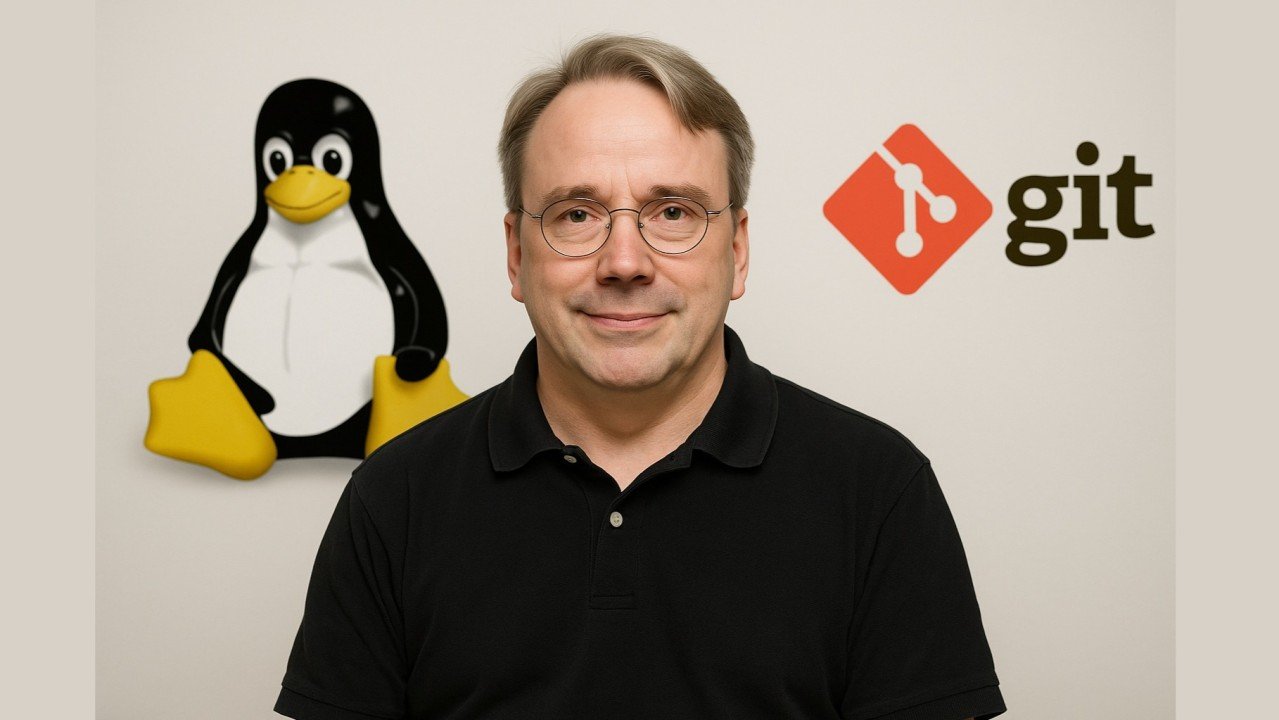
Nobody should start to undertake a large project. You start with a small _trivial_ project, and you should never expect it to get large. If you do, you’ll just overdesign and generally think it is more important than it likely is at that stage. Or worse, you might be scared away by the sheer size of the work you envision.
So start small, and think about the details. Don’t think about some big picture and fancy design. If it doesn’t solve some fairly immediate need, it’s almost certainly over-designed. And don’t expect people to jump in and help you. That’s not how these things work. You need to get something half-way _useful_ first, and then others will say “hey, that _almost_ works for me”, and they’ll get involved in the project.
And if there is anything I’ve learnt from Linux, it’s that projects have a life of their own, and you should _not_ try to enforce your “vision” too strongly on them. Most often you’re wrong anyway, and if you’re not flexible and willing to take input from others (and willing to change direction when it turned out your vision was flawed), you’ll never get anything good done.
In other words, be willing to admit your mistakes, and don’t expect to get anywhere big in any kind of short timeframe. I’ve been doing Linux for thirteen years, and I expect to do it for quite some time still. If I had _expected_ to do something that big, I’d never have started. It started out small and insignificant, and that’s how I thought about it.
Hello World!
Hello World!!!
I am Navin Dhanuka.
I am hereby starting a new life of mine.
I want to be highly scholarly in the world of Computer Science & Internet.
Of lately Open Source & Artificial Intelligence has captured all my attention.
In the next 4 years, I want to pursue Personal MBA & Personal MS CS.
I will be maintaining this blog almost every day.
My life starts from now.
God is Great!!!
I love you.